The Great Crossing
Long before Yough Lake Marina existed, the ground it sits on was already one of the most important river crossings in early America. The spot where the Youghiogheny was wide and shallow had been used by Native Americans for generations and was already known as the “Great Crossing” before any European set foot there, named to distinguish it from the “Little Crossing” of the Casselman River to the east.
George Washington crossed the Yough at or near the marina location on five separate expeditions (in 1753, 1754, 1755, 1770, and 1784), several times traveling both ways. General Braddock crossed there in 1755 on what turned out to be a one-way ticket, marching his forces toward the disastrous Battle of the Monongahela. Washington used the names “Great Crossing” and “Little Crossing” in his own journals, but the names predated his travels by years.
The trail that funneled all this traffic followed along what is now called Braddock's Run, crossed the Yough where the water spread wide and shallow, then followed up along what locals know as Jockey Hollow. Over the centuries, this route has carried many names: the Nemacolin Trail, Braddock's Road, the National Road or Pike, and today, simply Route 40.
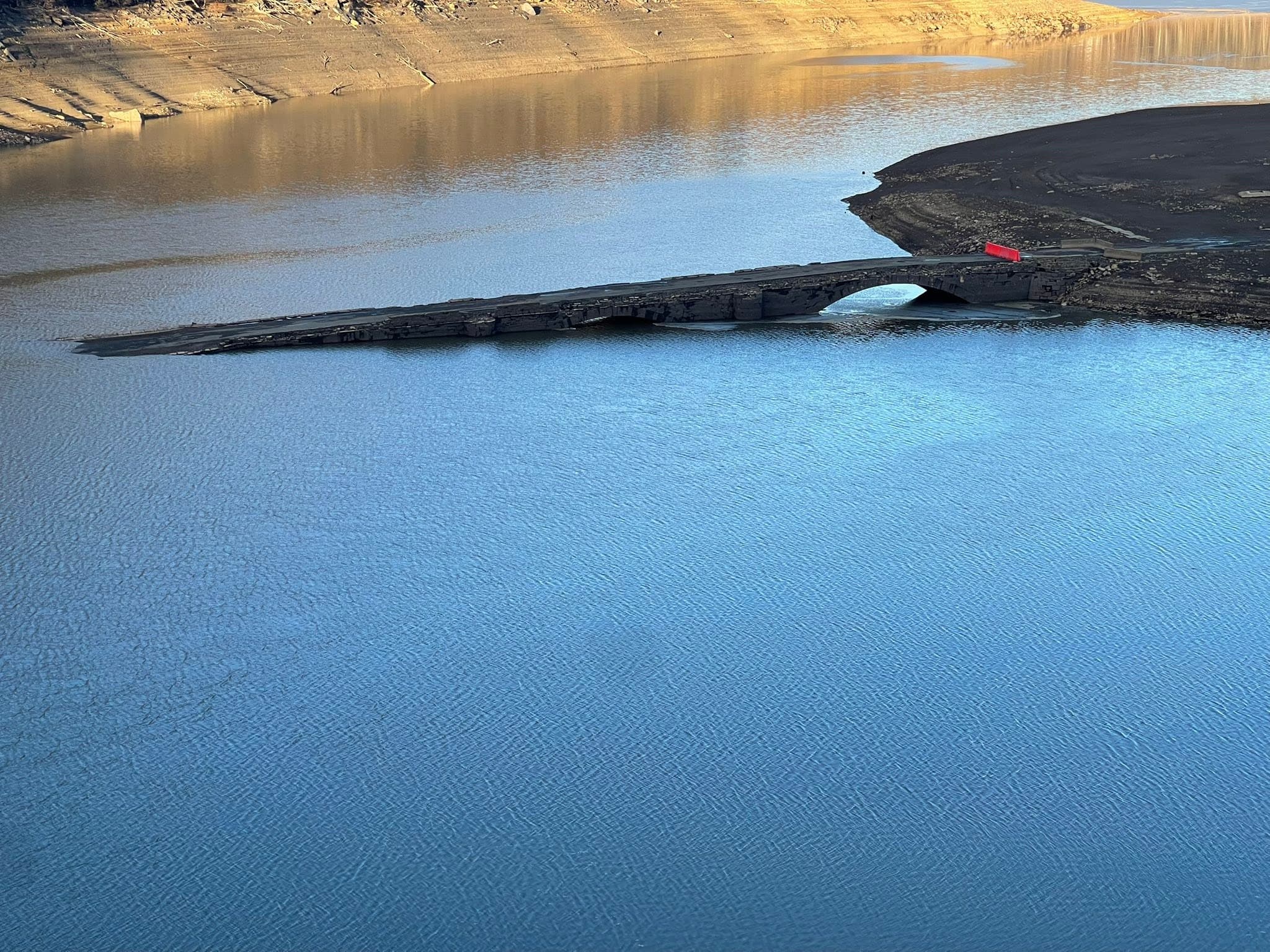

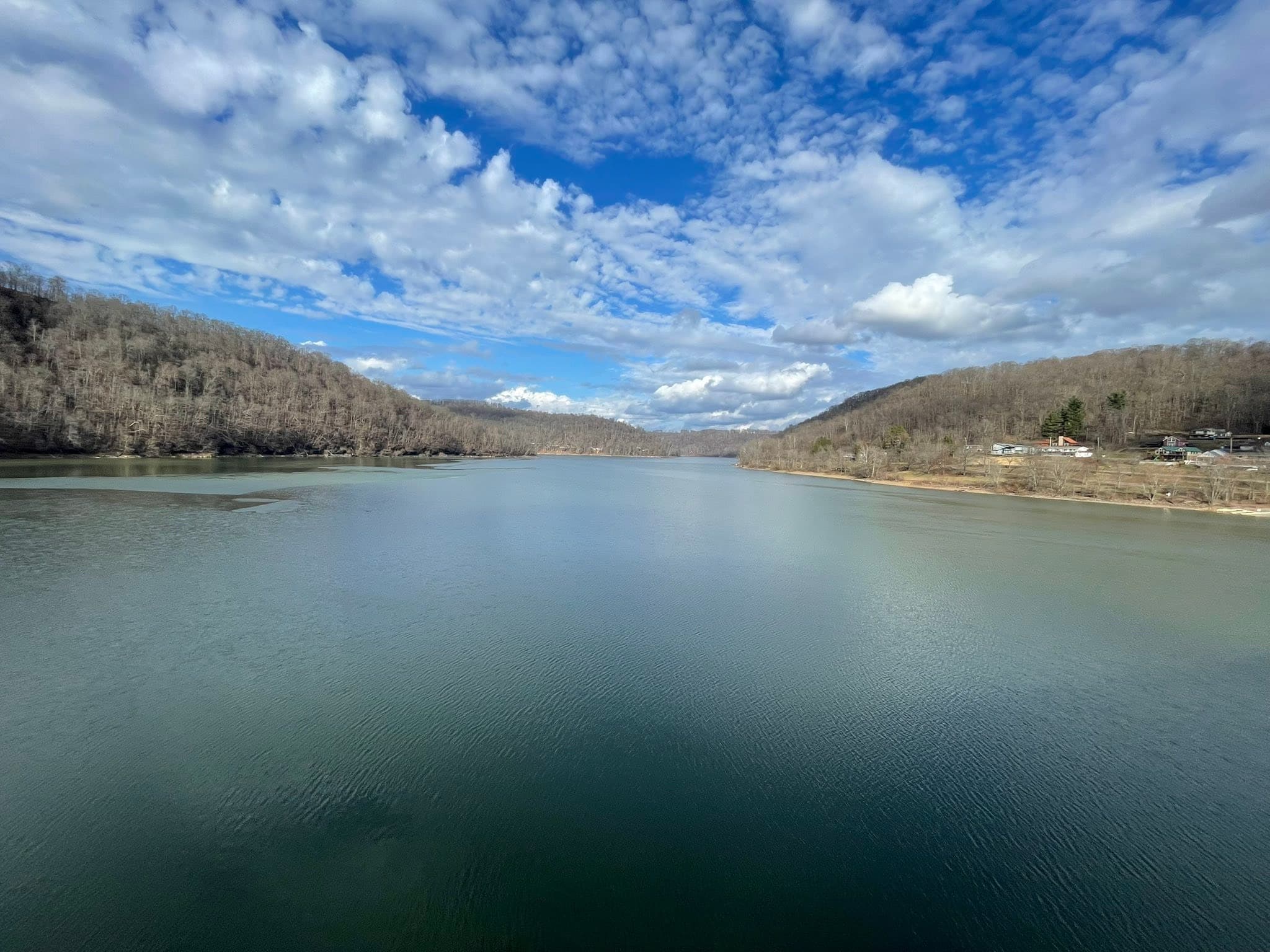
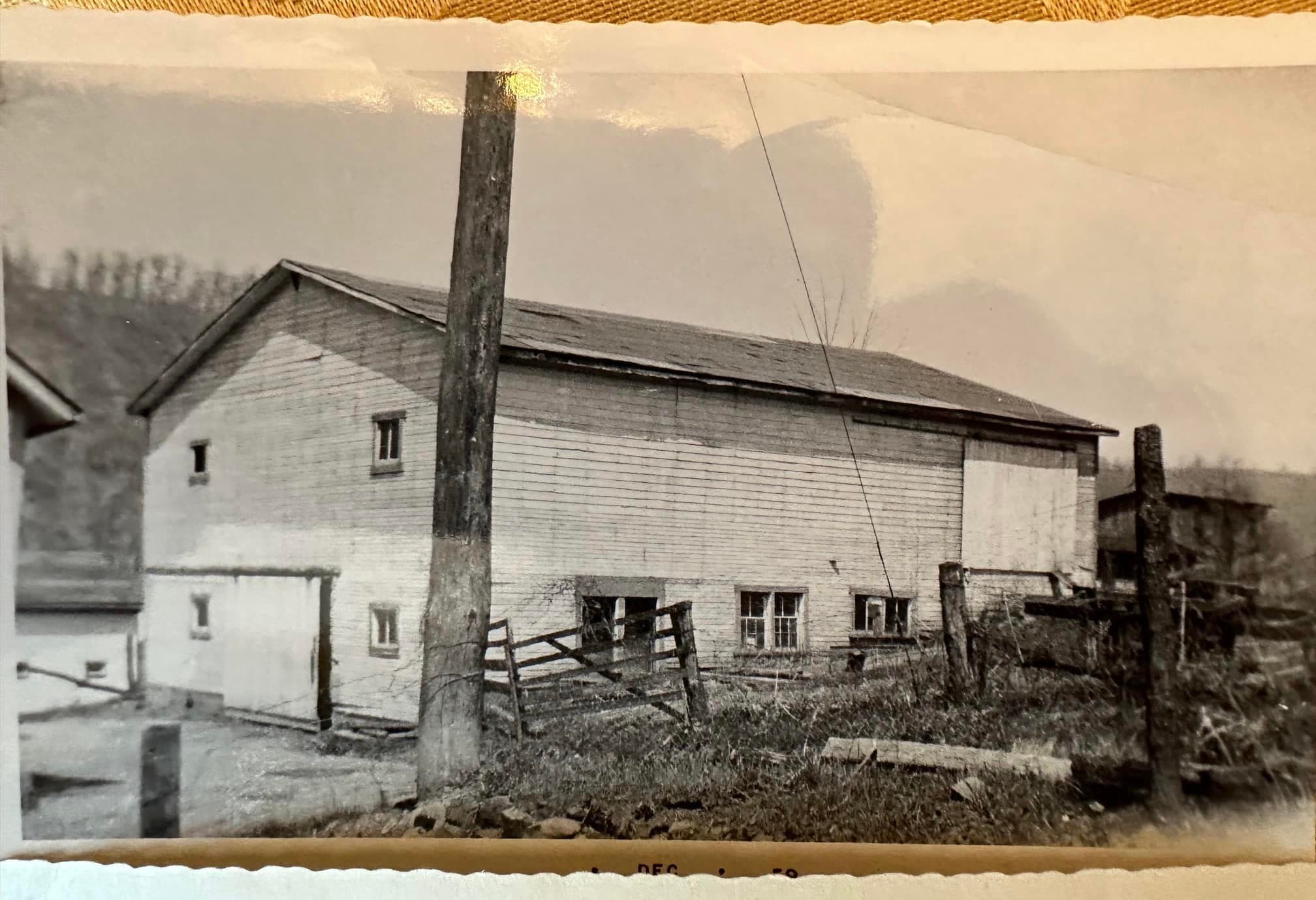
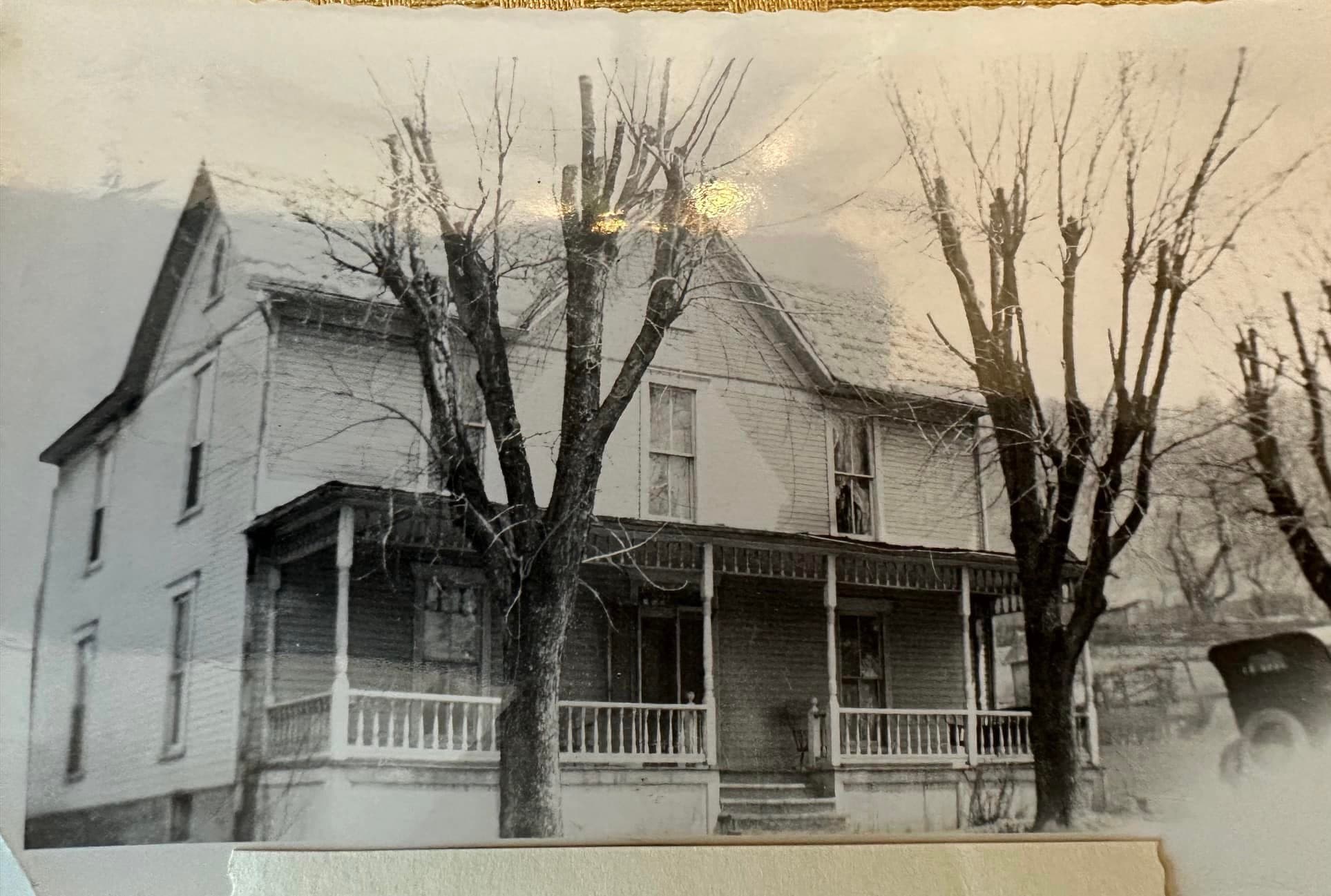
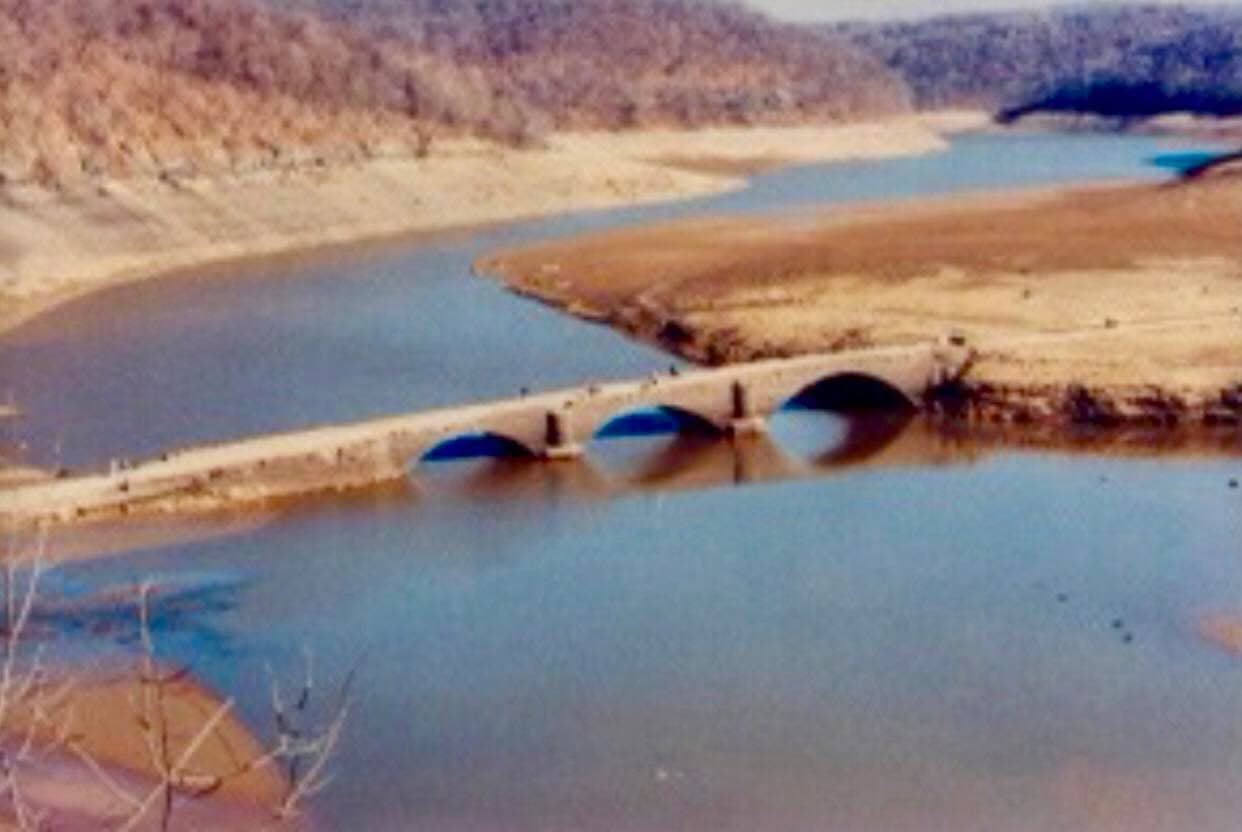
The Great Crossings Bridge and Somerfield emerge when the lake drops below ~1,389 ft elevation
The Submerged Town of Somerfield
Beneath the surface of Youghiogheny River Lake lies the old town of Somerfield, submerged when the dam was completed in 1943. The town's most famous landmark, the Great Crossings Bridge built in 1818, still stands on the lake bottom. Envisioned by George Washington, financed by Secretary of the Treasury Albert Gallatin, and dedicated by President James Monroe, the stone arch bridge carried the National Road across the Yough for over a century.
The old bridge runs from Somerfield north, crossing over toward Jockey Hollow. Its arches are not exposed until the lake level drops below elevation 1,389 feet, something that happens only in severe droughts. When it does, the bridge draws crowds. In 1991, visitors lined up to see the Great Crossings Bridge emerge from the receding water.
Youghiogheny River Lake
Authorized by the Flood Control Act of 1938, Youghiogheny River Lake is one of 16 flood control projects in the Pittsburgh District of the U.S. Army Corps of Engineers. The project provides flood protection for the Youghiogheny and lower Monongahela River Valleys as well as for Pittsburgh and the upper Ohio River. Since its completion in 1943, the Youghiogheny project has prevented flood damages estimated to be in excess of $569 million. The lake has the capability to store the equivalent runoff of 11 inches of precipitation from its 434-square-mile drainage area.
The dam also serves a modern purpose beyond flood control. The D/R Hydro Company operates a hydroelectric plant at the dam with the capacity to generate up to 12 megawatts of electricity per hour, enough to service approximately 8,000 homes for a year. It's a reminder that this lake, born from the need to control devastating floods, continues to serve the region in ways its builders may not have imagined.
Great Crossings Bridge Built
Envisioned by George Washington, financed by Albert Gallatin, and dedicated by President Monroe, the stone arch bridge carried the National Road across the Youghiogheny River.
Flood Control Act
Congress authorizes the Youghiogheny River Dam as one of 16 flood control projects in the Pittsburgh District.
Youghiogheny River Lake Completed
Delayed by the Second World War, the dam is rushed to completion because the country cannot afford a flood threatening the steel mills downstream. The lake fills, submerging the town of Somerfield and the Great Crossings Bridge beneath the water.
The Boating Boom
A tremendous boom in recreational boating follows the war. Mahogany inboards by Chris Craft and Century rule the waves, and outboard motors by Evinrude, Johnson, and Mercury make boat ownership available to the average working family. Someone even welds two lines of 55-gallon drums together and invents the pontoon boat. The original boat docks on the lake are installed by Jacob Spanko on the north side of the Route 40 bridge, then sold to William C. Quinette in the late 1950s. “W.C. Quinette Boat Docks” grows to approximately 100 slips on one large floating dock shaped like a trident, with a floating mechanic's shop, a floating snack bar, and rental boats. Gas is 37 cents a gallon and dock attendants earn 35 cents an hour.
The Leskinen Family at Yough Lake Marina
The marina has always been more than a family business. It was built and sustained by the Leskinen family alongside dedicated employees, loyal customers, and the broader Addison community. This is the family's story, but it was never theirs alone.
“Big Al” Leskinen Founds Yough Lake Marina
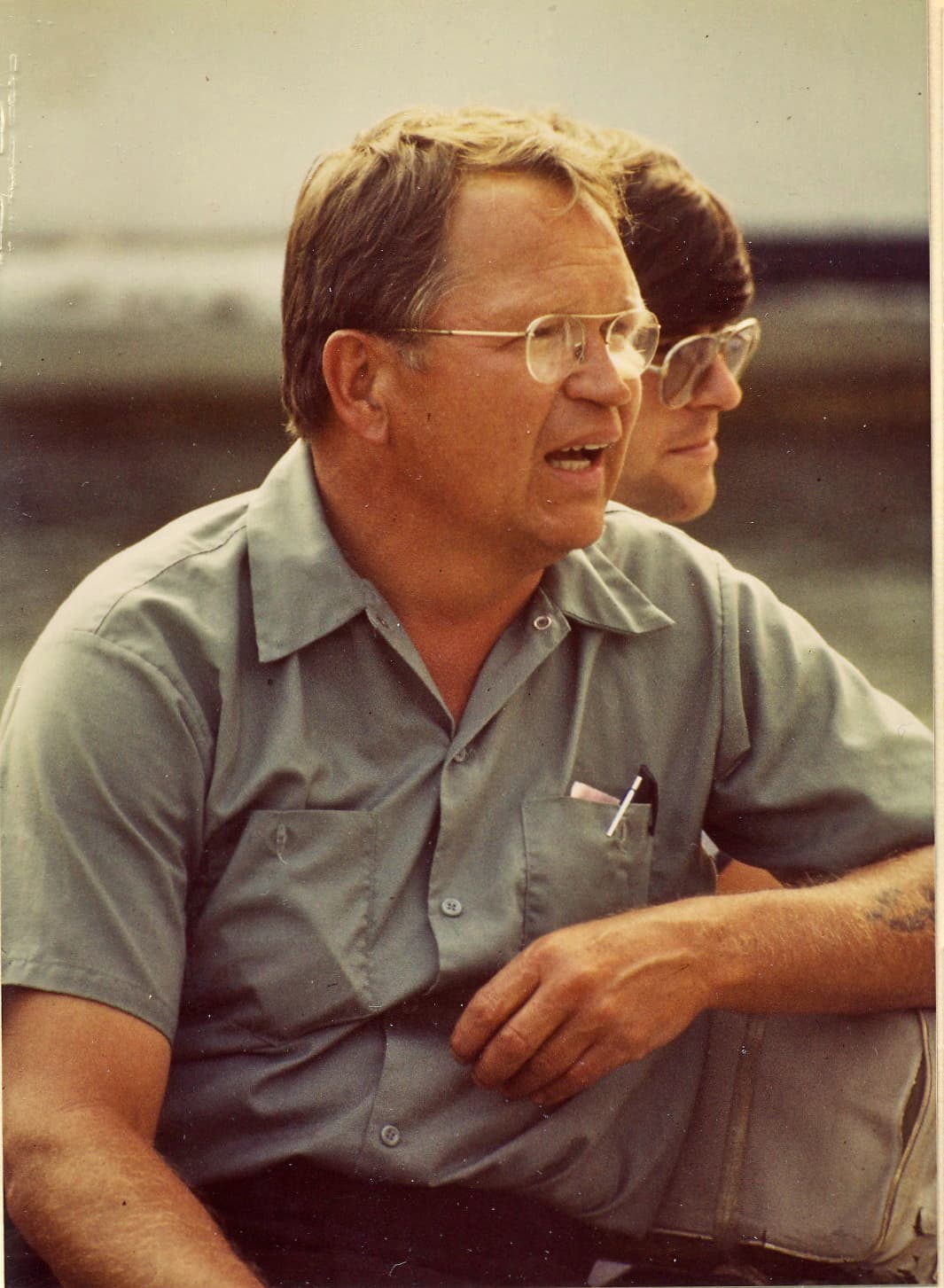
Big Al Leskinen
Allan “Big Al” Leskinen, born in 1927 to Finnish immigrants, joins the Navy the day after he turns 17 and serves in the South Pacific in the final year of World War II. After earning a degree on the G.I. Bill, he works his way to a Park Avenue office as a worldwide director of sales for Squibb. But his love for the water runs deeper than any career. When Bill Quinette decides to retire, Al purchases the boat docks, renames the business Yough Lake Marina, and more than doubles it to 212 slips. His fifteen-year-old son Steve starts work that first summer as a dock attendant.
Loss of Big Al
While towing a trailer from Holiday Harbor Marina to the Yough, Al Leskinen's vehicle is struck by a drunk driver on Route 40 near Braddock's Grave. Al does not survive. The marina is operated by Al's surviving wife until 1983.
Steve Leskinen Takes Over
Steve Leskinen, Al's son, purchases the business through Leskinen Enterprises, Inc. Steve has been part of the marina since that first summer in 1969. He attended Evinrude Outboard Motor School while still in high school, became an Academic All-American football player at Bucknell University, and earned a law degree from the University of Pennsylvania. Through it all, he never stopped working at the marina.
The Move to Somerfield South
Yough Lake Marina moves from the north side of the Route 40 bridge to its current seven-acre site on the south side. In cold March weather when the wind is calm, Steve uses a single 14-foot Jon boat with a 9.9 hp Evinrude to move each main dock one by one to the new location.
Grace Leskinen Returns

Grace Leskinen
Grace Leskinen, Steve's mother, returns to the marina and serves as office manager until 2001.
Modern Dock System Completed
Steve designs and supervises the construction of a steel-framed modular dock system with encased flotation and vinyl rub rail, replacing the original oak beams and 55-gallon drum flotation. The transformation is complete by 1999.
Three Generations on the Water
Steve, Shanon, and son Shane work at the marina daily. The Leskinen family continues to operate Yough Lake Marina as the only marina on the lake, with 330 slips across 10 docks. Over 55 years after Big Al first opened the gates, boaters still launch from the same stretch of shoreline where Washington forded the Yough.
Over more than five decades, Yough Lake Marina has been shaped by far more than the Leskinen family. We couldn't have done it without dedicated employees — office managers, dock builders, dock attendants, mechanics, and countless others who gave years of their lives to this place. And we couldn't have kept going without the customers and community who made Yough Lake Marina their home on the water, season after season. Thank you all.
Explore More About Yough Lake Marina
The history runs deep here, and so does our commitment to the boating community on Youghiogheny River Lake.